




The most effective natural ways to increase GLP-1 are eating protein and vegetables before carbs, getting more soluble fiber, adding healthy fats and fermented foods, eating slowly, walking after meals, and sleeping 7–9 hours. These raise your body’s own GLP-1 modestly. They don’t match prescription GLP-1 medications like semaglutide, which act far more strongly and for far longer.
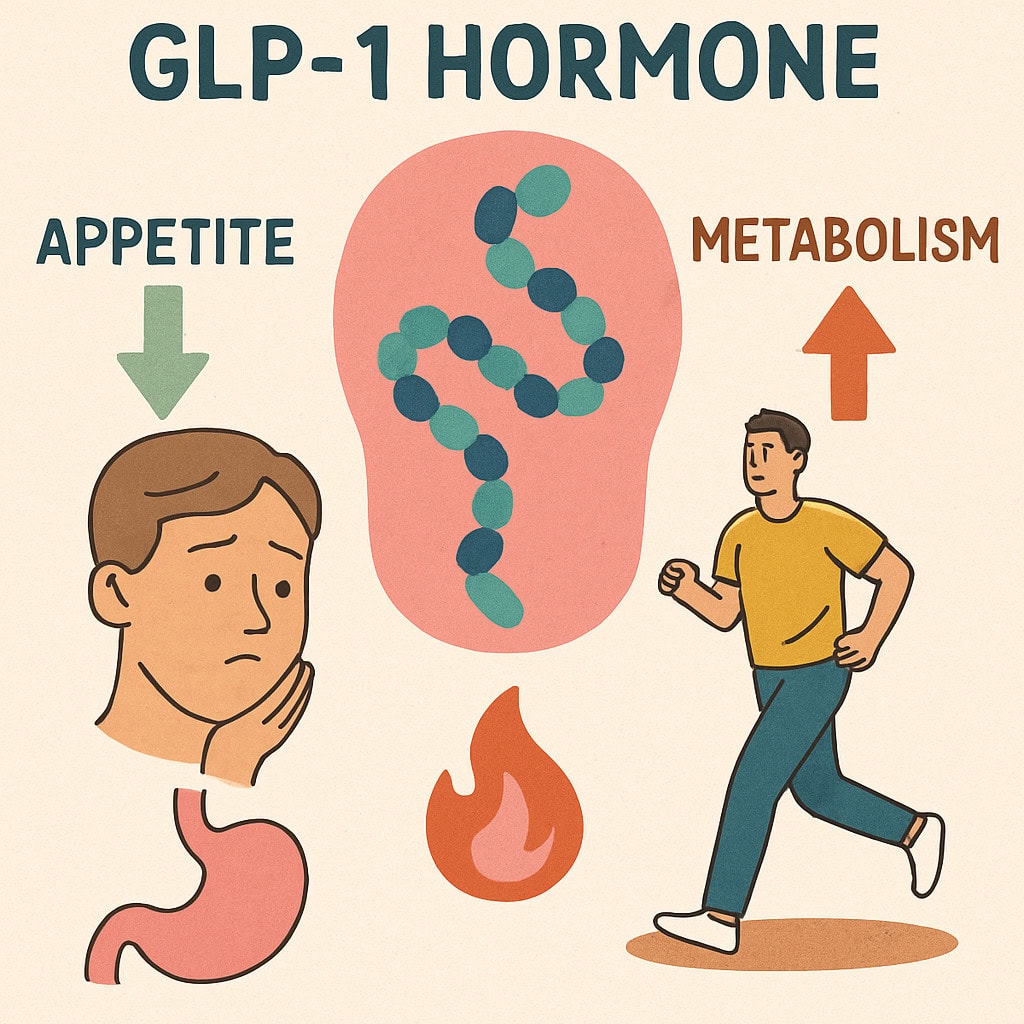
GLP-1 (glucagon-like peptide-1) is a hormone your gut releases after you eat. Below are 8 evidence-based ways to support it, what each one does, and how to tell when lifestyle changes aren’t enough.
Key Takeaways
• GLP-1 helps control appetite, fullness and blood sugar.
• Protein, soluble fiber, healthy fats and eating vegetables before carbs are the best-supported food strategies.
• Eating slowly, walking after meals and good sleep add to the effect.
• Natural boosts are short-lived and modest; no supplement works like a GLP-1 medication.
• If habits alone aren’t enough after about 3 months, a medical evaluation can help.
What Is GLP-1 and What Does It Do?
GLP-1 is made by L-cells in the lining of your small intestine and colon. It rises within minutes of eating and is broken down within about 2 minutes by an enzyme called DPP-4. That short life is why food-based boosts are modest, while prescription GLP-1 medications are designed to last for days.
When GLP-1 rises, it:
• Prompts your pancreas to release insulin when blood sugar is high
• Lowers glucagon, a hormone that raises blood sugar
• Slows how fast your stomach empties, so you stay full longer
• Signals fullness to your brain, which reduces appetite
Is GLP-1 naturally occurring? Yes. Your body makes it every time you eat. The question is how to get more of a response from each meal.
8 Natural Ways to Increase GLP-1
1. Eat protein at every meal
Protein is one of the strongest food triggers of GLP-1. Aim for a palm-sized portion (about 25–30 g) at each meal: eggs, Greek yogurt, fish, chicken, tofu or beans. In a small trial of 15 adults with type 2 diabetes, drinking 50 g of whey protein before breakfast raised GLP-1 by 141% and lowered post-meal blood sugar by 28% compared with water (Jakubowicz et al., 2014).
2. Eat vegetables and protein before carbs
The order you eat your food matters. In a study of 16 adults with type 2 diabetes, eating vegetables and protein before carbohydrates produced higher GLP-1 and about 53% lower post-meal blood sugar than eating the carbs first (Shukla et al., 2017). Start with the salad and the protein; save the bread, rice or potatoes for last.
3. Get more soluble, fermentable fiber
Gut bacteria ferment soluble fiber into short-chain fatty acids, which signal L-cells to release GLP-1. Good sources are oats, barley, beans, lentils, chickpeas, apples, chia and ground flaxseed. Most U.S. adults eat about 15 g of fiber a day, well below the 25–38 g recommended. Increase it gradually to avoid bloating.
4. Include healthy fats
Fat stimulates GLP-1 and slows digestion. Olive oil, avocado and nuts are the best choices. Fatty fish is great for heart health, but direct evidence that omega-3s raise GLP-1 is limited.
5. Add fermented foods for gut health
Yogurt, kefir, kimchi and sauerkraut support a diverse gut microbiome. Gut bacteria influence how much GLP-1 your body releases, but most of this research is early and in animals. Treat fermented foods as supportive, not proven.
6. Eat slowly
In a controlled study, men who ate the same meal over 30 minutes instead of 5 had about 40% higher GLP-1 and higher levels of PYY, another fullness hormone (Kokkinos et al., 2010). Put your fork down between bites and aim for 20 minutes or more per meal.
7. Move after meals
Exercise raises GLP-1 modestly in some studies, but its bigger benefit is better insulin sensitivity and blood sugar control. A 10–15 minute walk after meals lowers post-meal blood sugar. Over a week, aim for 150 minutes of moderate activity plus 2 days of strength training.
8. Prioritize sleep and manage stress
Short sleep disrupts appetite hormones, raising hunger and worsening blood sugar control. Some research also links sleep loss and disrupted body clocks to a weaker GLP-1 response. Aim for 7–9 hours on a regular schedule, and use stress tools that work for you (walking, breathing exercises, meditation), since chronic stress drives cravings.
Foods That Increase GLP-1
| Food group | Examples | How it helps |
| Protein | Eggs, Greek yogurt, fish, chicken, tofu, whey | Strong direct trigger of GLP-1 |
| Soluble fiber | Oats, barley, beans, lentils, apples, chia, flax | Gut bacteria turn it into compounds that release GLP-1 |
| Non-starchy vegetables | Leafy greens, broccoli, peppers | Fiber, and eaten first they improve the meal’s response |
| Healthy fats | Olive oil, avocado, nuts | Stimulate GLP-1 and slow digestion |
| Fermented foods | Yogurt, kefir, kimchi, sauerkraut | Support the gut bacteria involved in GLP-1 release |
Related: Understanding Visceral Fat and Its Health Risks

What Doesn’t Have Strong Evidence
• Intermittent fasting: can improve insulin sensitivity for some people, but studies on GLP-1 itself are mixed.
• Drinking water before meals: may help you feel full, with no clear effect on GLP-1.
• “GLP-1 booster” supplements (berberine, blends, some probiotics): limited human data, and none act like prescription medications. Talk to your doctor before starting any.
• “Natural semaglutide”: a marketing term. Semaglutide is a synthetic prescription medication with no over-the-counter equivalent.
Natural GLP-1 vs GLP-1 Medications
| Natural habits | GLP-1 medications (e.g. semaglutide) | |
| How it works | Helps your gut release more of your own GLP-1 | Lab-made version that resists breakdown |
| How long it lasts | Minutes to hours after a meal | Days; most are weekly injections |
| Effect on weight | Supports gradual weight management | 14.9% average body weight loss over 68 weeks, vs 2.4% with placebo (STEP 1 trial) |
| Prescription needed | No | Yes |
| Side effects | Few (more fiber can cause bloating at first) | Nausea and other digestive effects; needs medical monitoring |
Source: Wilding et al., New England Journal of Medicine, 2021
Related: Starting Semaglutide: What to Expect

When to Consider Medical Support
If you’ve followed these habits consistently for about 3 months and still struggle with weight, cravings or blood sugar, a medical evaluation can show what’s holding you back. Hormone imbalances such as low testosterone, thyroid issues or insulin resistance can all make weight harder to manage.
At TRTMD Health Clinic in Annapolis, MD and Las Vegas, NV, Dr. Ross VanAntwerp and our team offer:
• Comprehensive hormone evaluations
• Medical weight loss with hormone- and peptide-based plans, including GLP-1 therapy
• Testosterone replacement therapy and hormone replacement therapy
• Personalized peptide therapy
• Concierge wellness plans with in-person or telemedicine visits

Frequently Asked Questions
What foods increase GLP-1 the most?
Protein (eggs, fish, Greek yogurt, whey), soluble fiber (oats, beans, lentils) and healthy fats (olive oil, avocado, nuts) have the best evidence. Eating vegetables and protein before carbs boosts the effect.
Does fiber increase GLP-1?
Yes, especially soluble, fermentable fiber. Gut bacteria turn it into short-chain fatty acids, which stimulate GLP-1 release.
Can you increase GLP-1 without medication?
Yes, but modestly. Diet, eating speed, activity and sleep raise your natural GLP-1 response after meals. They don’t reach the levels or duration of GLP-1 medications.
Can you get GLP-1 over the counter?
No. GLP-1 medications require a prescription. Over-the-counter “GLP-1 boosters” are supplements, not equivalents.
Does exercise increase GLP-1?
Slightly, in some studies. Exercise’s larger benefit is better insulin sensitivity and blood sugar control, which supports the same goals.
How long does it take to see results?
More protein and fiber can make you feel fuller at the very next meal. Changes in weight and blood sugar usually take several weeks of consistent habits.
Talk to a TRTMD Doctor
Want a plan built around your labs, not guesswork? Book a consultation at our Annapolis or Las Vegas clinic, or call (518) 255-8668.
This article is for education and isn’t a substitute for medical advice. Talk to your doctor before changing your diet, exercise or medications.
