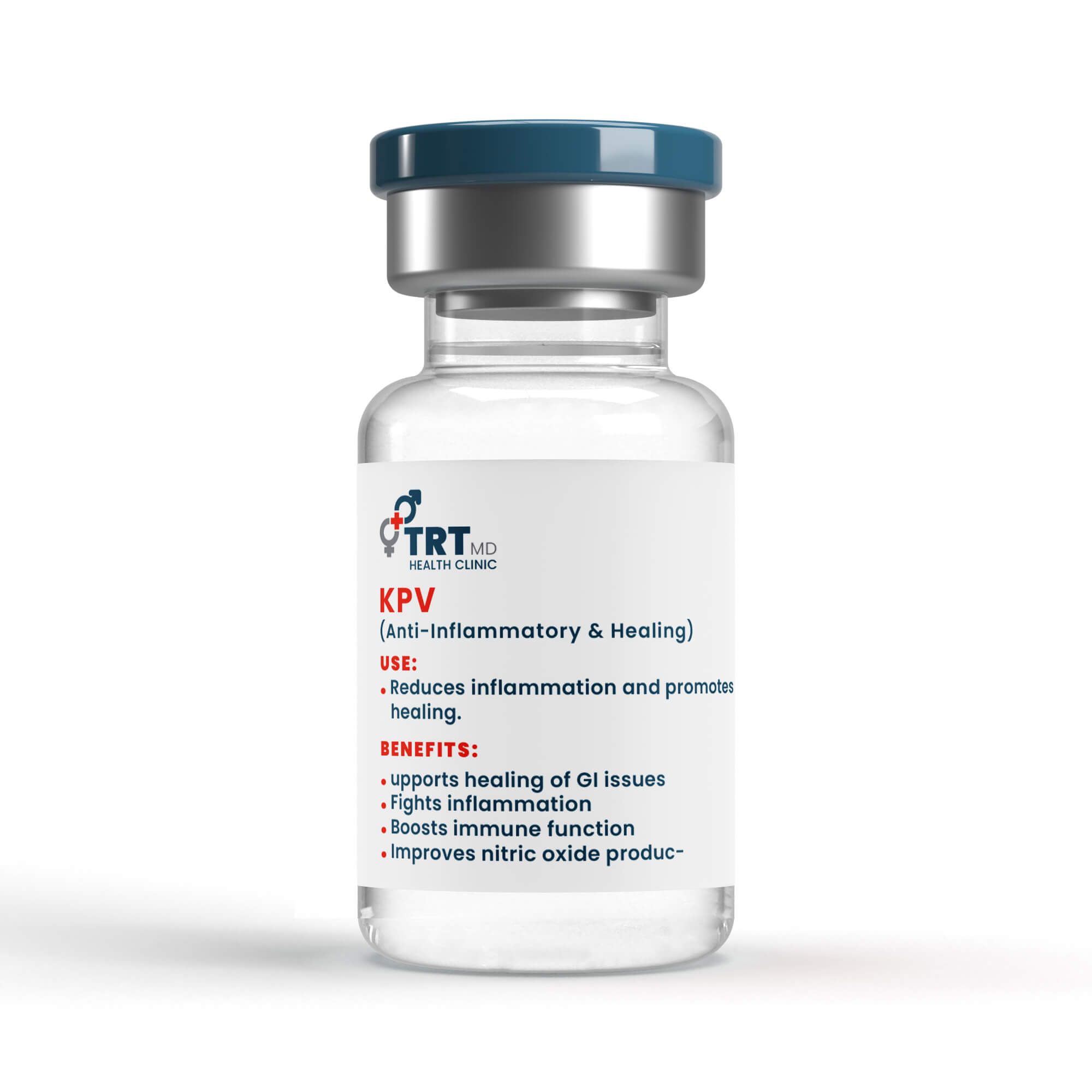
KPV (Anti-Inflammatory & Healing): Reduce Inflammation, Promote Gut Healing, and Support Recovery
KPV is a fragment of a natural anti-inflammatory hormone your body already makes. It works by switching off inflammation inside the cell rather than at the surface, and decades of cell and animal research support that mechanism, particularly in the gut.
Beyond gut health, KPV accelerates wound healing, fights systemic inflammation, and supports the body’s natural defense mechanisms. With its combined anti-inflammatory, antimicrobial, and healing effects, KPV provides a multi-faceted approach to recovery and overall wellness.
As of 2026, KPV is currently eligible for compounding by prescription. Here’s what’s genuinely known.
What is KPV?
KPV is a tripeptide, a three-amino-acid chain of lysine, proline, and valine (Lys-Pro-Val). It’s the tail end (residues 11–13) of alpha-melanocyte-stimulating hormone (alpha-MSH), a natural hormone with well-documented anti-inflammatory properties.
Full-length alpha-MSH does several things at once: it reduces inflammation, but it also activates melanocortin receptors that cause skin darkening and influence appetite. Researchers found that the KPV tripeptide, residues 11 to 13, is the minimal fragment that retains much of the parent hormone’s anti-inflammatory signaling while shedding the pigmentary activity.
The result is a compound with the anti-inflammatory action stripped of the hormonal side effects, which is the entire reason the isolated tripeptide became a research subject in its own right.
At just 342 daltons, KPV is small enough to be delivered multiple ways, orally, topically, or by injection, depending on what’s being targeted.
How KPV Works
Most anti-inflammatory peptides bind a receptor on the cell surface and trigger a signal but KPV works differently.
- KPV works inside the cell: KPV’s primary documented mechanism is inhibition of NF-κB (nuclear factor-kappa B), one of the master transcription factors that switch on inflammatory genes. Rather than acting at a surface receptor, KPV enters the cell and interferes with NF-κB activation directly, reducing the production of inflammatory signals at the source. It also dampens MAPK (mitogen-activated protein kinase) signaling, a second major inflammatory pathway.
- KPV rides a nutrient transporter into the cell: The intestinal peptide transporter PepT1, which normally absorbs small peptides from food, also carries KPV directly into intestinal cells. This was the central finding of the landmark study by Dalmasso and colleagues, who demonstrated that PepT1-mediated uptake of KPV reduced intestinal inflammation in experimental colitis models (Gastroenterology, 2008). Because PepT1 is expressed at high levels in inflamed intestinal tissue, this creates a degree of natural targeting, the peptide is taken up where it’s needed.
The practical implication of working inside the cell, on NF-κB, is that KPV reduces inflammation without the broad immunosuppression of steroids and without the pigmentary effects of its parent hormone.
What KPV is being studied for
This is the upside, and it’s grounded in a well-understood mechanism rather than wishful thinking. Here’s where the research points:
- Gut health and inflammation: The most studied area by far. KPV’s PepT1-targeted, NF-κB-calming action has made it a focus of research into inflammatory bowel conditions and gut-barrier health, with animal studies showing reduced gut inflammation and improved barrier integrity.
- Skin and inflammatory skin conditions: Because the same inflammatory pathways operate in skin, topical KPV is being studied for inflammatory skin issues, and it doesn’t cause the skin darkening associated with its parent hormone.
- Wound healing and tissue repair: KPV’s anti-inflammatory and antimicrobial properties have made it a research subject for supporting wound healing, particularly where excess inflammation slows recovery.
- Whole-body inflammation and recovery: Beyond any single organ, the appeal is a precise anti-inflammatory that works at the source without shutting down the immune system the way steroids can.
Each of these rests on the same well-characterized mechanism, which is what distinguishes KPV from compounds whose benefits are claimed but unexplained.
Common uses of KPV and who’s interested in it
KPV tends to draw interest from people dealing with inflammation that hasn’t fully responded to conventional approaches, usually in one of these situations:
- Chronic gut and digestive inflammation, where a targeted, gut-concentrated anti-inflammatory is appealing
- Inflammatory skin conditions, explored topically
- Recovery from injury or surgery, where excess inflammation is slowing healing
- A general focus on lowering systemic inflammation as part of a broader wellness or recovery plan
- People already exploring peptide therapy who want a precise anti-inflammatory option
What connects them is a goal: calming inflammation in a targeted way without the trade-offs of long-term steroid use. KPV is one tool aimed at that goal, and the right approach depends on what’s actually driving the inflammation in the first place.
What research shows, and what it doesn’t
What the research supports (largely preclinical):
- KPV’s NF-κB-inhibiting, anti-inflammatory mechanism is well-documented across multiple cell and animal studies
- In animal models of colitis, oral KPV has reduced disease severity, lowered inflammatory cytokines in colon tissue, and improved markers of gut barrier function, including the Dalmasso PepT1 work above and Kannengiesser and colleagues, who showed the melanocortin-derived tripeptide KPV had anti-inflammatory potential in murine models of inflammatory bowel disease (Inflammatory Bowel Diseases, 2008)
- In wound-healing and skin-inflammation models, topical KPV has shown anti-inflammatory and tissue-repair effects
- It also shows some direct antimicrobial activity in laboratory studies
What the evidence does not yet include:
- There are no completed human clinical trials demonstrating that KPV treats inflammatory bowel disease, IBS, Crohn’s, colitis, or any specific condition in people. The gut evidence, genuinely promising, is from cell culture and animal models.
- That means claims that KPV treats these diseases are extrapolations from strong preclinical data, not demonstrated human outcomes. The biological rationale is plausible and the mechanism is real; the human efficacy data simply hasn’t been generated for KPV specifically.
Current regulatory status For KPV
This is the part most relevant to whether you can actually access KPV, and it’s genuinely in motion right now.
- Currently eligible for compounding. KPV was removed from the FDA’s Category 2 “do not compound” list effective April 2026, which means licensed compounding pharmacies can currently prepare it under a physician’s prescription.
- Under FDA advisory review on July 23, 2026. KPV is one of seven peptides scheduled for Pharmacy Compounding Advisory Committee (PCAC) evaluation for permanent Section 503A eligibility. A favorable outcome would give it clear, lasting regulatory standing; an unfavorable one could end legal compounding. There is genuine near-term uncertainty about long-term access.
KPV currently occupies a legitimate-but-provisional position. It’s prescribable now through proper channels, but its status past mid-2026 depends on a regulatory decision that hasn’t happened yet.
Note: FDA approval is a process, not a verdict on whether something works, and an expensive one, built around patentable drugs with a commercial sponsor to fund the trials. For some treatments, particularly those using a patient’s own un-patentable biology, “unapproved” genuinely means “unfunded, not unproven.”
Safety considerations
KPV’s reported side-effect profile in research and clinical use to date is generally mild, and its selectivity (no pigmentary or steroid-like immunosuppressive effects) is part of its appeal. But here’s what you need to know:
- No long-term human safety data exists. The absence of large, long-term human studies means the long-range safety picture is simply uncharacterized.
- Sourcing risk. As with all compounded peptides, quality depends entirely on the pharmacy. Gray-market “research” products carry contamination and mislabeling risk.
- It’s not a substitute for diagnosed disease treatment. Anyone with Crohn’s, ulcerative colitis, or another diagnosed inflammatory condition should not replace established, evidence-based therapy with KPV on the strength of preclinical data.
Frequently asked questions
Is KPV FDA-approved?
As of April 2026 it is eligible for compounding by prescription, but it faces an FDA advisory review in July 2026 that will determine its longer-term compounding status.
How is KPV different from BPC-157?
They work differently. BPC-157 is studied mainly for tissue repair and blood-vessel formation; KPV is an anti-inflammatory that works by dampening NF-κB inflammatory signaling rather than directly stimulating repair.
Does KPV cause skin darkening like alpha-MSH?
No. KPV deliberately excludes the part of alpha-MSH that activates pigment-producing receptors, so it doesn’t cause the skin darkening associated with the full hormone.
How is KPV taken?
Depending on the target, it’s used orally (for gut applications), topically (for skin), or by subcutaneous injection. There’s no FDA-approved product or official dosing, route and dose should be set by a prescribing physician.
Next Steps?
If chronic inflammation, gut issues, or a recovery problem is what brought you here, the useful step is a conversation with a physician who can look at what’s actually driving your symptoms, weigh whether something like KPV fits alongside established care, and, if it does, prescribe it through a legitimate compounding pharmacy with proper monitoring.
That’s the conversation TRTMD is built for, physician-led, honest about where the evidence is strong and where it’s still preliminary, and focused on what fits your situation rather than what’s marketed hardest.